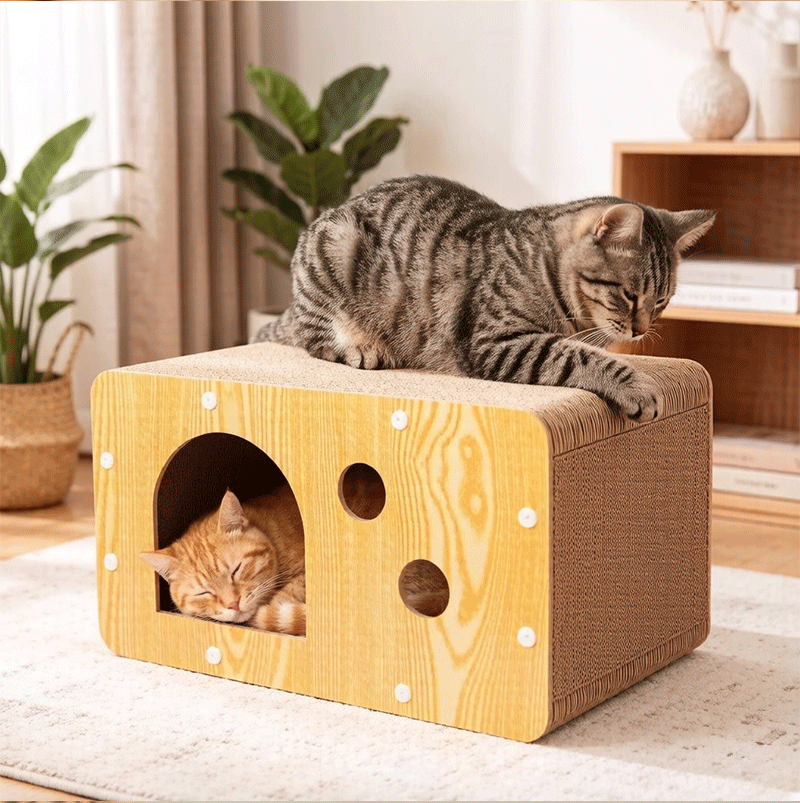
Why combine a cat bed and scratcher?
A combined cat bed and scratcher gives cats one familiar place to scratch, stretch, rest and sleep. It can simplify the room layout for owners while encouraging the cat to use an appropriate scratching surface instead of furniture.
The most common material combinations are corrugated cardboard, natural sisal and solid wood frames paired with a replaceable scratching panel. The best option depends on scratching intensity, usable size, stability, ventilation and cleaning requirements.
Choose by material
Corrugated cardboard and white kraft paper
Corrugated cardboard offers strong value and a scratching texture many cats accept quickly. A bed-shaped unit is generally quiet during use and can work as both a lounging surface and a scratcher. High-density pure wood-pulp cardboard tends to resist crushing better than loose, low-density layers.
Reversible designs extend service life because the panel can be flipped after one side becomes worn. Cardboard is a practical choice for renters, first-time buyers and households that prefer a low-cost replaceable surface.
Natural sisal
Sisal provides firmer resistance and generally lasts longer than disposable cardboard. It suits cats that scratch forcefully or use the product many times a day. Lifespan varies widely with fiber density, construction, the number of cats and scratching intensity, so avoid judging durability from the material name alone.
Solid wood with sisal or replaceable cardboard
A solid wood frame can support vertical, wall-mounted, enclosed or multi-level designs. It is often more stable and tip-resistant, while replaceable scratching inserts reduce the need to discard the whole product. Wall-mounted units can save floor space in smaller homes, but the fixing method must suit the wall and the cat’s weight.
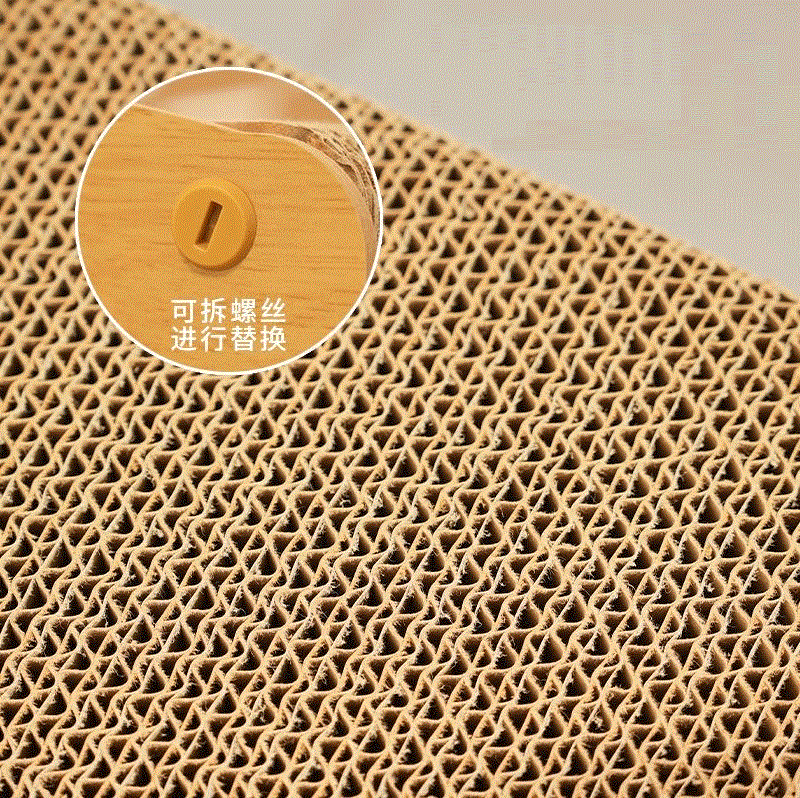
Dense, even corrugated layers and secure replaceable fasteners can extend the working life of a scratcher-bed.
Choose by household need
Choosing the right size
When deciding between two sizes, the larger usable area is usually the safer choice. Measure the cat rather than relying only on labels such as small, medium or large.
- Resting width: As a starting point, choose an inner width around the cat’s shoulder width plus approximately 5 cm.
- Stretching length: Compare the usable length with the cat’s full stretch and allow roughly 10 cm of additional space.
- Scratch-and-sleep allowance: For a bed that also functions as a scratcher, add another 3–5 cm where practical so the cat can turn and reposition.
- Large or heavy cats: Check load ratings, joint strength and the depth of the lounging area.
Always focus on the inner diameter or usable platform, because thick frames and raised edges can make the actual resting area much smaller than the listed outer dimensions.
Structure and stability
A combined unit must remain steady during scratching, jumping and sleeping. Look for a wide base, non-slip pads, secure fasteners and rounded edges. For enclosed models, openings should allow comfortable entry without forcing the cat to crouch unnaturally.
Replaceable panels are especially useful. They allow owners to change a worn scratching surface while retaining the stronger frame, reducing long-term waste and cost.
Cleaning and lifespan
Breathability and cleaning access matter because the same surface collects hair, skin oils and scratching debris. Textile areas should ideally have removable, washable covers. Breathable technical fabric, Oxford cloth and short-pile faux fur can be practical when the care instructions match the household’s cleaning routine.
Vacuum sisal and cardboard surfaces regularly with a soft brush attachment. Do not soak cardboard. Replace a non-washable cardboard insert when it becomes heavily soiled, loses structural strength, develops an odor or sheds excessively. In many households this may be every two to three months, but actual timing depends on use and hygiene.
A practical buying checklist
- Choose material according to scratching intensity and expected replacement frequency.
- Measure the inner usable area, not only the outside dimensions.
- Confirm the frame does not slide, wobble or tip.
- Prefer replaceable scratching panels and removable washable covers.
- Inspect ventilation, entry size, edges, fasteners and odor.
- Check recent reviews and replacement-part availability instead of relying on one headline rating.
For more material guidance, read What Is a Sisal Cat Scratching Board? and our general scratching board buying guide.
Conclusion
A good cat bed and scratcher combo balances comfort with scratching performance. Corrugated cardboard offers affordable replaceability, sisal provides firmer long-term resistance, and a solid wood frame improves stability and supports replaceable inserts. Measure the usable interior carefully, choose a structure that matches the cat’s confidence and body size, and plan for realistic cleaning and replacement.
Frequently asked questions
Is cardboard or sisal better for a cat bed scratcher?
Cardboard is affordable, quiet and easy to replace, while sisal is firmer and generally more durable. The best choice depends on the cat’s preferred texture and scratching intensity.
How large should a cat bed and scratcher combo be?
Use the inner usable space as the main measurement. Allow room beyond the cat’s shoulder width and full-stretch length so it can turn, scratch and rest comfortably.
How often should a cardboard scratcher-bed be replaced?
Replace it when it is crushed, heavily soiled, unstable, odorous or shedding excessively. Many households replace the insert every two to three months, but usage varies.
What is best for a timid cat?
A cave-like or partially enclosed bed can provide more security than an open lounger. Make sure the entrance is large enough and the interior remains ventilated.
Looking for customizable cat furniture?
Explore material, size, structure and packaging options for cat beds and scratching products.