Why cats need to scratch
Many people assume that when a cat scratches the sofa, it is simply “misbehaving.” In reality, scratching is a normal and vital instinct for cats. It allows them to maintain their claws and stretch their bodies while marking their territory by leaving behind both visual scratch marks and their scent.
Organizations like the ASPCA and Cats Protection note that completely stopping a cat from scratching is unrealistic; a better approach is to provide them with appropriate scratching tools.
How should you choose a cat scratching board?
Observe whether your cat scratches horizontally or vertically
If your cat frequently scratches the sides of the sofa, door frames, or wall corners, a vertical scratching post or a corner scratching board is usually the best choice.
If your cat prefers scratching carpets, mats, or stairs, consider a horizontal corrugated cardboard scratcher, a sisal mat, or an inclined scratching board. Cats Protection recommends selecting a product based on your cat’s natural scratching orientation.
For senior cats or those with joint issues, horizontal scratching boards may be easier to use than tall vertical posts. International Cat Care also points out that some cats may find tall vertical posts uncomfortable to use.
Ensure the base is stable so it does not tip over
Cats put their body weight onto the scratching board when they scratch. If a scratching post wobbles or falls over, the cat may get scared and refuse to use it again.
Vertical scratching posts should be tall enough to allow the cat to stand up and fully stretch its front legs, while the base needs to be wide, heavy, and tip-resistant. VCA Animal Hospitals advises that scratching posts must be sturdy enough to withstand the force of a cat’s scratching.
Try different materials
Common materials include:
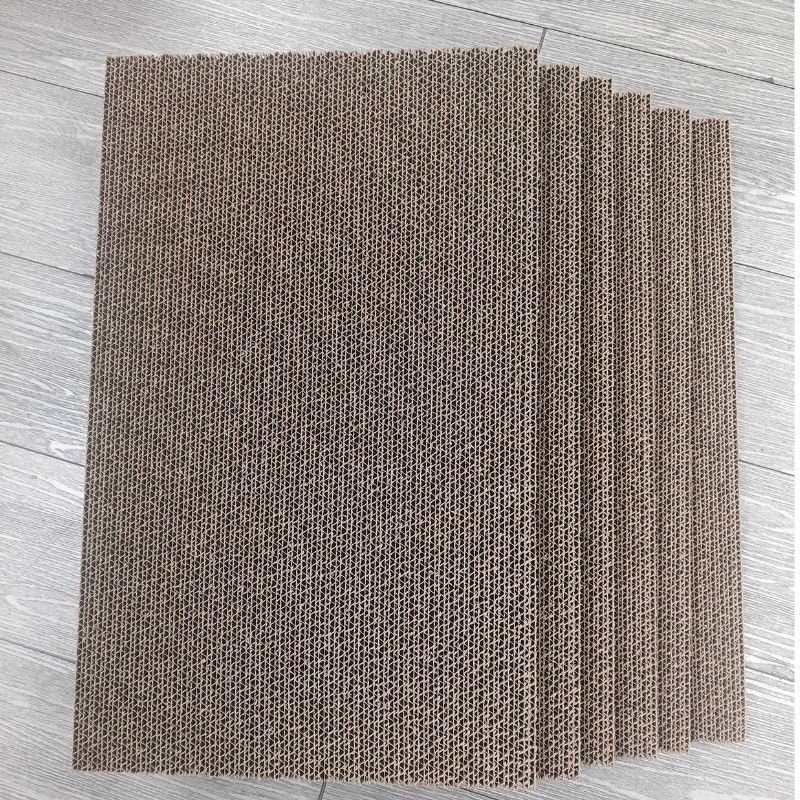
- Corrugated cardboard: Affordable and popular with cats who enjoy shredding.
- Sisal rope: Suitable for vertical scratching and generally very durable.
- Wood: Offers a texture similar to tree trunks, which some cats love.
- Carpet or fabric: Suitable for cats who prefer softer surfaces.
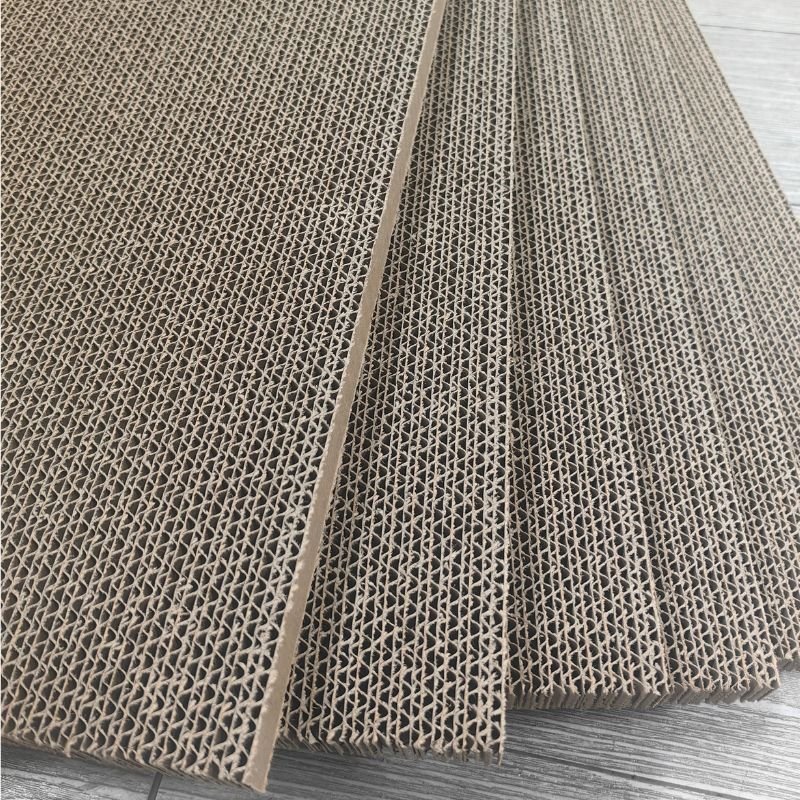
Corrugated density, resistance and layer direction all affect scratching feel and durability.
Every cat has different preferences. Some cats prefer horizontal cardboard, others like vertical sisal, and some even favor wooden boards or old fabric. Instead of buying multiples of the same type right away, try offering a few options with different materials and orientations to let your cat “vote” on their preference.
If you are making a scratching post out of old carpet, avoid materials with tight loops, as a cat’s claws can get snagged in them. VCA Animal Hospitals also recommends using safe, untreated wood—free of paint or chemical treatments—when building your own scratching post.
Should you throw away a worn-out scratching board immediately?
Not necessarily.
Many cats actually prefer scratching boards that already show signs of use; the existing marks make it easier for their claws to catch, and the board carries their familiar scent. As long as there are no obvious safety hazards—such as a loose base, exposed sharp parts, or large sections of material peeling off—you can keep using it.
However, if the scratching board is no longer stable, or if there are loose strips of material that could tangle in your cat’s claws, it should be replaced promptly.
Do not punish your cat for scratching
Scratching is a natural behavior for cats. Scolding, hitting, spraying with water, or forcibly stopping them might frighten your cat without actually solving the problem.
More effective strategies include:
- Providing multiple scratching boards of different types.
- Placing the scratching boards in the right locations.
- Protecting furniture you do not want them to scratch.
- Rewarding your cat when they use the scratching board.
- Observing whether your cat is experiencing anxiety, fear, or conflict with other cats.
If your cat suddenly starts scratching excessively, or if this behavior is accompanied by hiding, changes in appetite, or increased aggression, consult a veterinarian or a professional animal behaviorist; these signs could be linked to stress or changes in the home environment.
Conclusion
A suitable scratching board satisfies a cat’s needs for claw maintenance, stretching, play, and territory marking, while also helping to protect your sofa and other furniture.
If your cat is not using the scratching board, it does not necessarily mean they dislike scratching boards; the location, angle, or material might not be quite right yet. By observing and experimenting, you can usually find the combination that suits it best.
Frequently asked questions
What type of scratching board is best for a cat?
The best type matches the cat’s natural posture: vertical for cats that scratch furniture sides or door frames, and horizontal or inclined for cats that scratch carpets and floors.
Where should a cat scratching board be placed?
Place it close to the cat’s sleeping area, favorite activity zone, or the furniture it already scratches. Visibility and convenience strongly influence use.
When should a scratching board be replaced?
Replace it when the base becomes unstable, sharp parts are exposed, or loose material could snag the cat’s claws. Normal surface wear alone does not always require immediate replacement.
How can I encourage my cat to use a new scratcher?
Offer more than one orientation or material, place the scratcher in an active area, reward successful use, and avoid punishment.