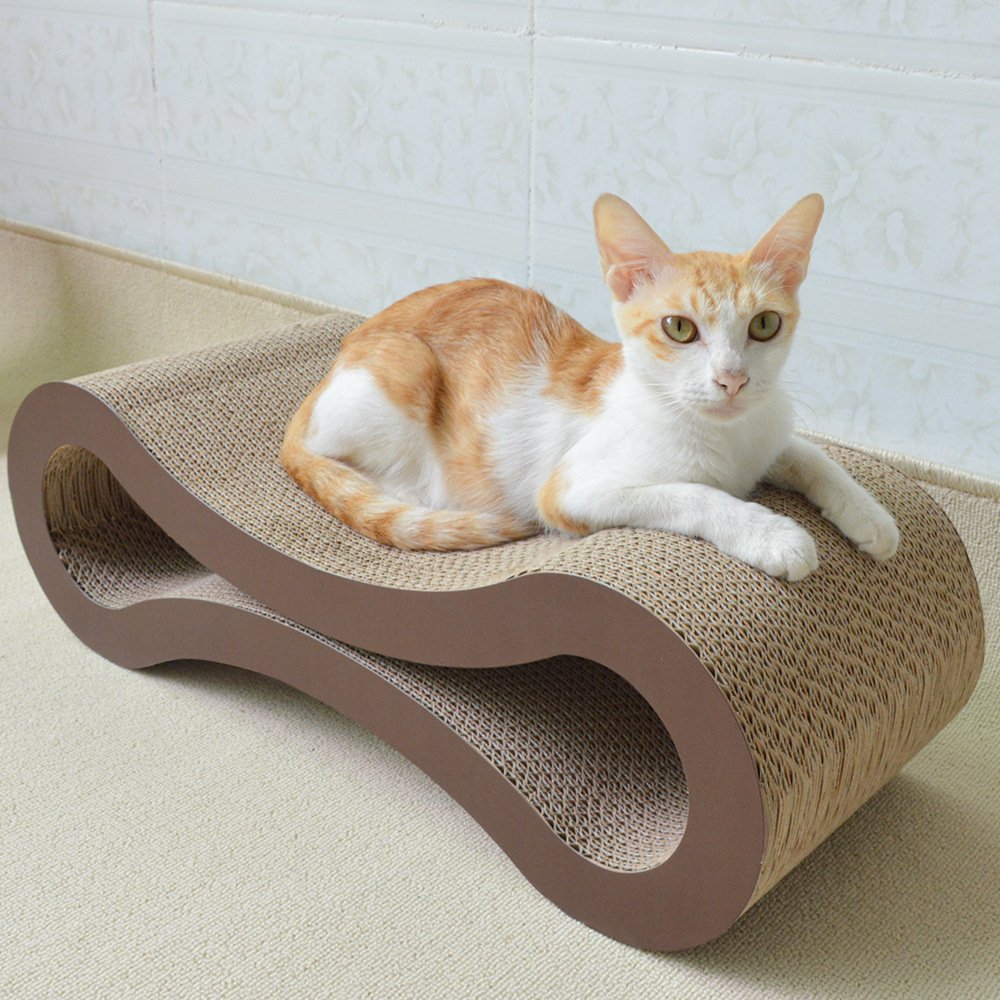
Scratching is not bad behavior. It is a normal, healthy part of a cat’s daily routine. The right scratching board gives indoor cats a dedicated place to stretch, maintain their claws and release energy while helping protect the home.
Why provide a scratching board for your cat?
Redirect natural scratching away from sofas, curtains and wall corners.
Scratching helps cats release tension and maintain a healthier mental state.
Regular scratching helps old nail sheaths shed naturally and prevents overgrowth.
Cats scratch to leave visual and scent marks, stretch the muscles through their shoulders and back, and remove worn outer layers from their claws. Without an appealing alternative, household surfaces often become the next best option.
What types of scratching boards are available?
Choose by material
Choose by shape
- Vertical or columnar: Suitable for cats that prefer standing while scratching. These models can be positioned against wall corners or beside a sofa.
- Flat or mat-style: Ideal for cats that scratch horizontally and for homes with underfloor heating.
- Bed-shaped or multifunctional: Combines a scratching surface with a comfortable place to lounge or sleep.
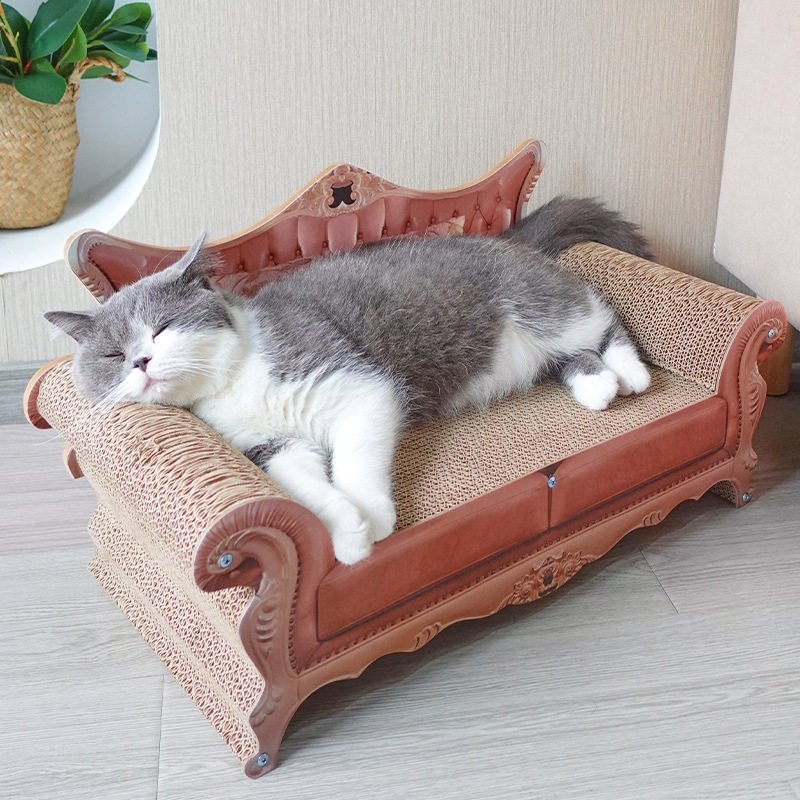
Bed-shaped scratchers combine daily claw care with a comfortable resting area.
How to choose the right scratching board
Size
The board should be long enough for a full-body stretch. A useful rule is at least 1.5 times the cat’s body length. Larger cats usually need an extended model.
Thickness
For corrugated cardboard, choose a thickness of at least 3 cm. Very thin boards can be shredded through quickly and may move during use.
Stability
Look for a non-slip base. Vertical scratchers should be firmly secured against a wall or supported by a wide, weighted base to prevent tipping.
Safety
Choose products bonded with natural adhesives, such as corn-based glue, and avoid chemical dyes, sharp edges or pungent odors.
How to encourage your cat to use the scratching board
- Use a smart placement strategy: Put the scratcher along a route your cat frequently travels. At first, position it beside the furniture they normally scratch.
- Add a scent lure: Apply a small amount of catnip occasionally or attach a feather toy to attract attention.
- Create a reward system: Offer a treat immediately after your cat uses the board to build a positive association.
- Maintain it regularly: Replace worn corrugated inserts. Clean and disinfect sisal versions when the care instructions allow it.
A simple upgrade for indoor-cat wellbeing
A suitable scratching board supports natural behavior, protects the home and gives indoor cats an outlet for movement and relaxation. Focus on the cat’s preferred scratching direction, choose a stable and safe construction, and place the product where it is easy to discover.