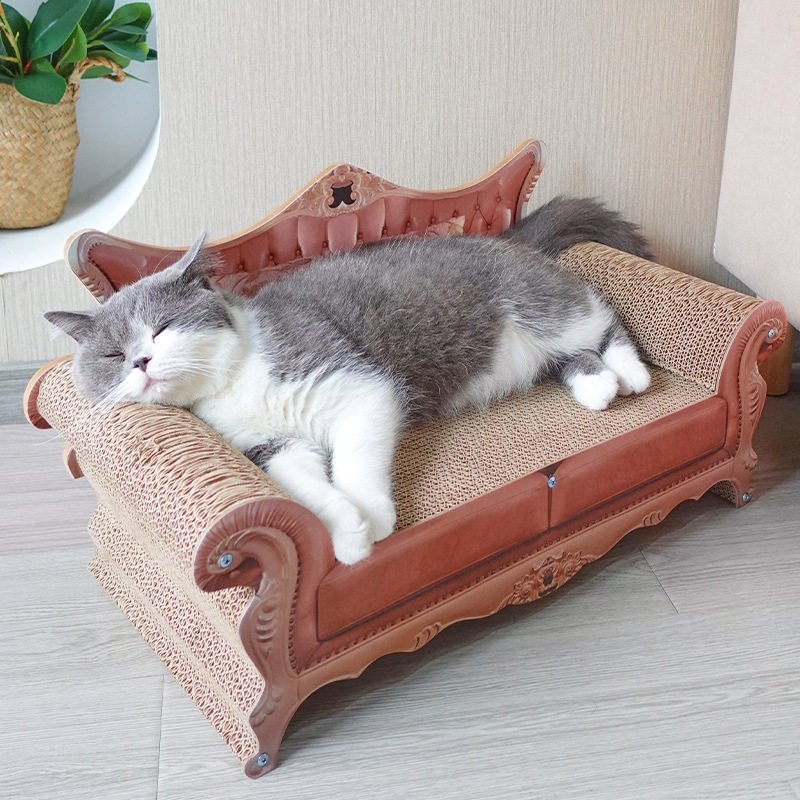
Choosing the right scratching board means considering your cat’s body size and scratching habits while making sure the design fits naturally into your home. Follow this practical sequence to avoid the most common buying mistakes.
Start with your cat’s key characteristics
Choose size based on body type
The effective scratching length should be about 1.5 times your cat’s natural standing length. For small-to-medium cats under 5 kg, choose a board at least 40 cm long. For larger cats over 5 kg, start with a flat model measuring 60 cm or more.
Enough usable length lets a cat fully extend its front legs, stretch and scratch comfortably. When the surface is too short, the sofa may still feel like the better option.
Choose shape based on scratching habits
Matching the product to the cat’s natural scratching posture usually leads to much higher acceptance.
Choose material based on claw type
For short-haired cats with sharp claws, prioritize natural sisal. It is durable, creates little debris and helps remove old claw sheaths. For kittens or heavier cats with blunter claws, high-density, pressure-molded corrugated cardboard offers moderate resistance and a more comfortable feel.
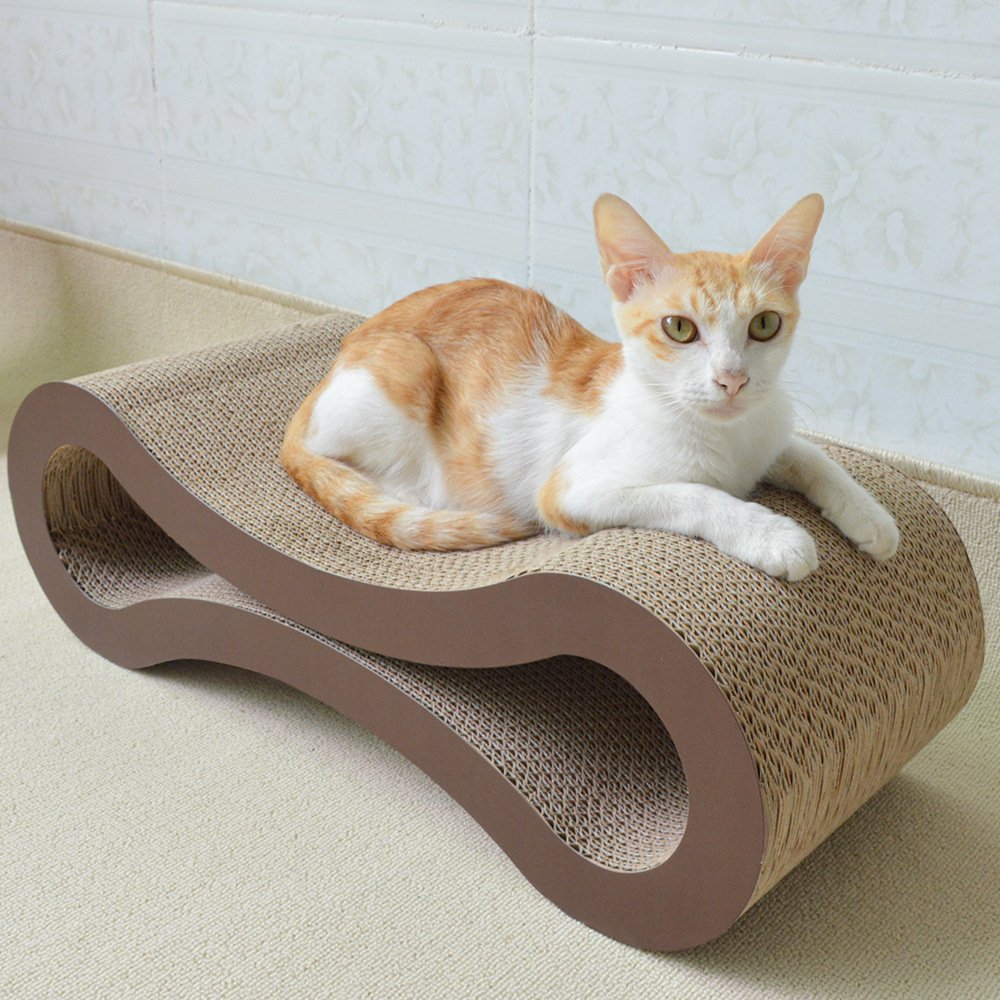
A large, curved surface gives cats room to stretch, scratch and rest comfortably.
Three essential criteria that prevent buying mistakes
Look for virgin wood-pulp cardboard and eco-friendly starch or corn-based adhesive with almost no odor.
Choose a low center of gravity and a non-slip base so the board stays steady during energetic use.
For cardboard models, edges thicker than 2.5 cm resist curling, collapsing and excessive debris.
Material safety
Avoid cheap boards bonded with low-quality chemical glue. Strong odors may irritate a cat’s sensitive respiratory system and make the product less appealing.
Structural stability
If a board shifts or tips over and scares the cat, they may avoid it in the future. A wide base, low profile and non-slip underside help create a confident scratching experience.
Durability
For corrugated cardboard, check the edge thickness and density. Edges above 2.5 cm generally extend product life, reduce early collapse and keep loose paper debris under control.
Tailor your choice to your home setup
Small homes and narrow walkways
Choose an L-shaped model that fits against a wall. It can use as little as 0.3 m², keeps pathways clear and turns an unused corner into a practical scratching zone.
Homes where cleanliness matters
If you have rhinitis or prefer minimal daily cleanup, choose high-density corrugated cardboard with enclosed layers. The construction helps hold paper scraps inside and can reduce cleaning from daily to roughly once a week.
Multi-cat households
Choose an extra-large bowl-shaped scratcher measuring at least 60 cm. It gives two cats enough space to scratch or play without crowding, while sturdy load-bearing construction allows it to double as a shared cat bed.
The best board is the one your cat will use
Start by observing where, how and at what angle your cat already scratches. Then select the size, shape and material that supports that behavior. When safety, stability and home placement are right, the scratching board becomes an easy part of the cat’s daily routine.