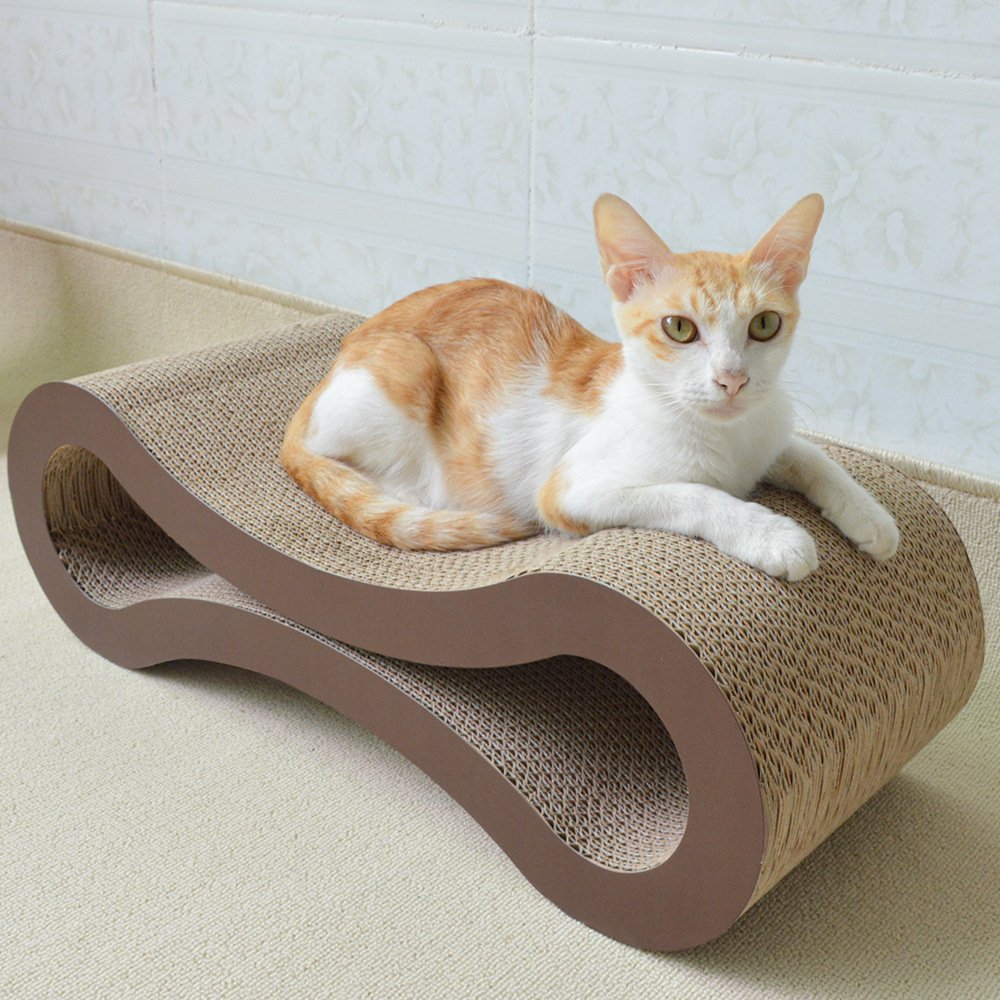
You can quickly assess the quality of a cat scratching board by focusing on five essential factors. These checks help separate a well-made product from one that may shed excessively, collapse early or discourage the cat from using it.
Material and eco-friendliness
Start with the smell test
Unpack the product and smell it before use. A quality scratching board should be free of pungent odors. Prioritize virgin wood-pulp corrugated cardboard bonded with eco-friendly starch-based glue.
Avoid cheap models made with low-quality industrial adhesives. Volatile fumes can irritate a cat’s sensitive respiratory tract and may also make the product less appealing.
Check cardboard density
Press firmly on the corrugated surface with one finger. If the indentation is less than 2 mm and the surface springs back quickly, the density is generally adequate. Low-density cardboard crumbles when picked at or retains deep dents after pressing, often falling apart after only a few days.
Durability and shedding resistance
Inspect edge thickness
For corrugated cardboard models, choose thickened edges above 2.5 cm. Reinforced edges reduce curling and uneven stress, helping the board maintain its shape for much longer.
Review sisal winding quality
For sisal models, look for tight, natural winding. The fibers should be neat and secure, shedding only small short fibers during use rather than pulling away in large clumps.
Try the white-paper test
Place a sheet of white paper beneath the scratcher for a full day. A light trace of dust suggests a genuinely low-dust surface. Heavy debris indicates weak material or loose construction and may be inconvenient for owners with rhinitis or robot vacuums.
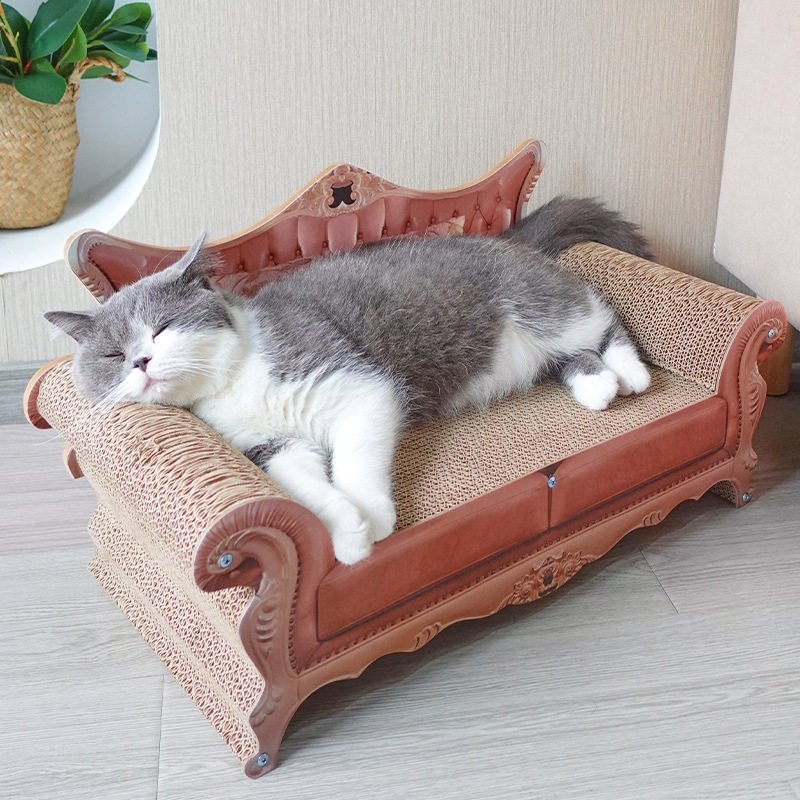
A well-built scratcher should remain stable, comfortable and structurally sound during daily use.
Structural stability
Prioritize a wide base and low center of gravity. Bowl-shaped and L-shaped vertical designs can offer better stability than very lightweight boards, preventing the unit from sliding or tipping when a cat scratches vigorously.
Size suitability
An adult-cat scratcher should be at least 50 cm long. A surface longer than 60 cm allows a full front-leg extension and a proper stretching-and-scratching motion, reducing strain on the shoulder and neck joints.
For large cats over 7.5 kg, choose an extra-large bowl-shaped model measuring at least 60 × 45 cm. High-quality versions should support substantial weight without collapsing.
For smaller homes, an L-shaped vertical model fits neatly into a corner, avoids blocking walkways and offers both horizontal and vertical scratching surfaces.
Cleaning and long-term value
Look for washable components
If hygiene is a priority, choose a removable, washable cover. It makes cat hair and dust easier to remove without picking debris from narrow crevices.
Consider double-sided use
Double-sided cardboard models offer better value. Once one side is worn, flipping the insert can effectively double its usable life.
Avoid low-quality printed surfaces
Large areas of cheap printed decals can flake during scratching. Loose ink fragments may be accidentally ingested, creating an avoidable safety risk.
A practical five-point quality check
- Material: Low odor, safe adhesive and adequate density.
- Durability: Reinforced edges or tightly secured sisal.
- Stability: A wide, non-slip base with a low center of gravity.
- Size: Enough length and width for the cat’s full stretch and weight.
- Cleaning: Low-dust construction, washable parts or reversible surfaces.
Evaluating these fundamentals gives you a much clearer picture of real product quality than decorative styling alone.